
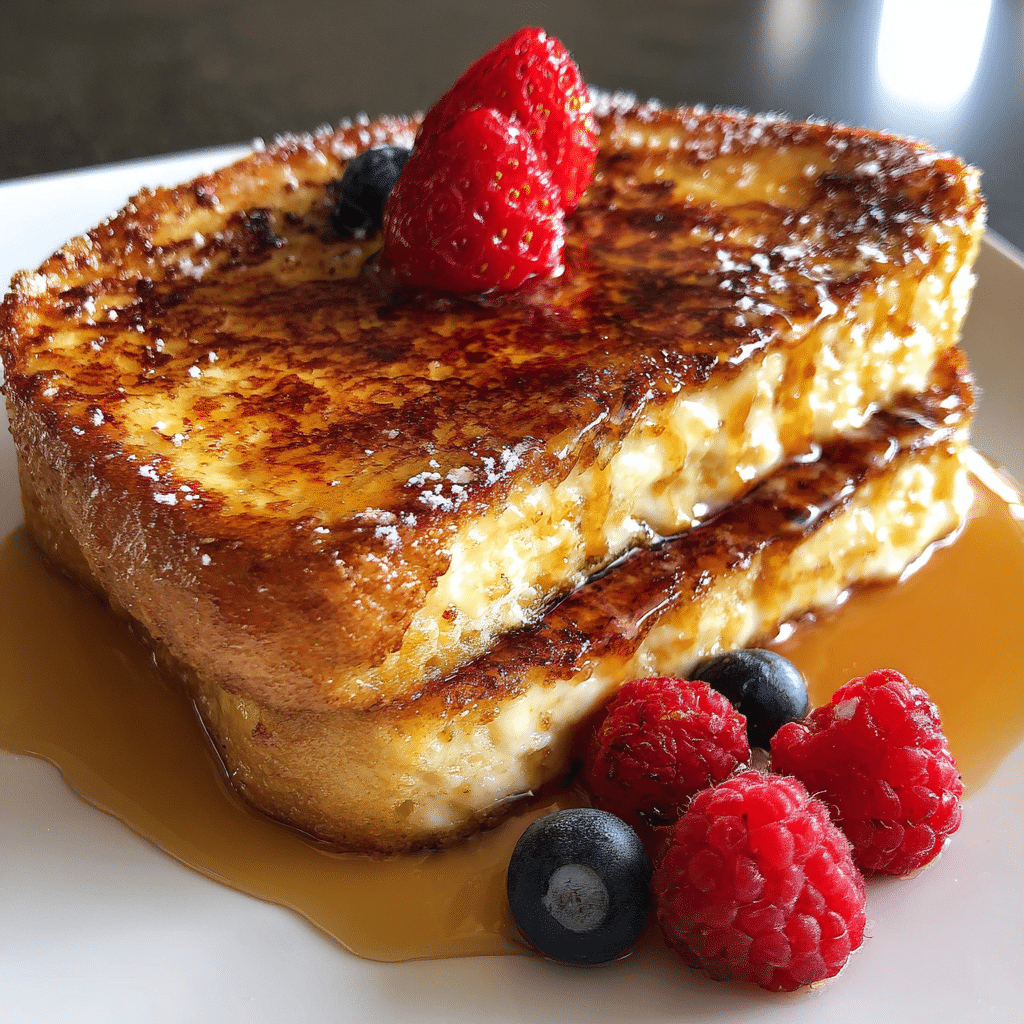
Crème brûlée French toast sounds intimidating, but I’m here to show you it’s the opposite. I’m Simon, and my entire culinary philosophy centers on one simple truth: the best recipes don’t have to be complicated they just need to be intentional, made with care, and designed to bring genuine joy to your table.
If you’ve ever felt disappointed by soggy, bland French toast that tastes like bread soaked in sweet milk, then this recipe is your redemption. Traditional French toast suffers from a singular problem: it prioritizes softness over flavor complexity. Crème brûlée French toast solves this by introducing caramelized sugar, vanilla custard richness, and a torch-kissed exterior that shatters between your teeth. The result? A restaurant-quality breakfast that tastes like someone spent hours in the kitchen, even though you invested less than thirty minutes.
This isn’t just my personal obsession it’s become the secret weapon in my kitchen. Megan, my pastry genius, has been experimenting with flavor variations (she made a brown butter version last week that was absolutely transcendent). Jackson, our grill master, claims this is the only breakfast that justifies leaving the smoker dormant on weekend mornings. And Olivia? She’s captured it so beautifully in photographs that people genuinely think we’ve added artificial props when it’s simply the natural beauty of caramelized sugar catching light.
In this complete guide, I’m sharing exactly how to create this magnificent breakfast at home. We’ll cover bread selection, custard technique, caramelization methods, foolproof timing, creative variations, and answers to every question you might have. Whether you’re a curious beginner or a confident home cook, this recipe works beautifully every single time.
Why Crème Brûlée French Toast Works
This recipe succeeds because it captures the best qualities of both classics French toast’s rich custardy interior and crème brûlée’s spectacular textural contrast while solving traditional problems with each.
- Creates dramatic textural contrast: The torched sugar exterior shatters audibly when you bite down, giving way to a silky, custard-soaked interior that melts on your tongue
- Delivers authentic crème brûlée flavor without the fussy ramekins: You get that sophisticated caramelized sugar taste in a format that’s actually practical for home cooking
- Transforms ordinary bread into something extraordinary: This technique elevates day-old bread, brioche, or challah into something that tastes like it belongs on a Michelin-starred menu
- Perfect for both weekday indulgence and weekend entertaining: Takes less time than most breakfast recipes but impresses more than nearly any other
Choosing the Right Bread for Crème Brûlée French Toast
Bread selection is non-negotiable for this recipe’s success. Your bread choice determines the custard absorption rate, structural integrity, and final texture.
Best Bread Types for This Recipe
Brioche stands as the gold standard for French toast and works beautifully here. Its buttery richness and tender crumb absorb custard perfectly while maintaining structural integrity during cooking and caramelization. Challah delivers similar results with slightly less richness and a more pronounced eggy flavor. For a more refined approach, try thick-cut slices from a quality brioche loaf rather than thin sandwich bread, which becomes too fragile. The ideal bread should be 3/4 to 1 inch thick and preferably one day old (day-old bread absorbs custard more effectively than fresh bread, which tends toward mush). French bread offers a sturdier alternative if you prefer a less rich result. Avoid soft white bread entirely it becomes a soggy mess rather than a custardy delight.
Buying Tips
Visit your local bakery rather than the grocery store’s pre-packaged bread section. Bakery brioche and challah feature superior texture and flavor. Ask your baker for a loaf that’s preferably one day old, or purchase fresh and let it sit overnight on your counter before slicing. This aging process is essential it allows moisture to redistribute throughout the crumb, creating the perfect custard-absorption capability. If you’re stuck with fresh bread, lay slices on a wire rack uncovered for 4-6 hours before using.
Substitutions
Panettone (Italian holiday bread) creates an interesting variation with subtle fruit notes that pair beautifully with the caramelized sugar. Sourdough offers a tangy contrast to the sweet custard. Thick-cut pound cake can substitute in a pinch, though it creates a denser final product. Avoid lean breads like ciabatta or sourdough starters designed for savory applications—they won’t absorb custard properly and create an unpleasant texture.
Ingredients & Prep for Crème Brûlée French Toast
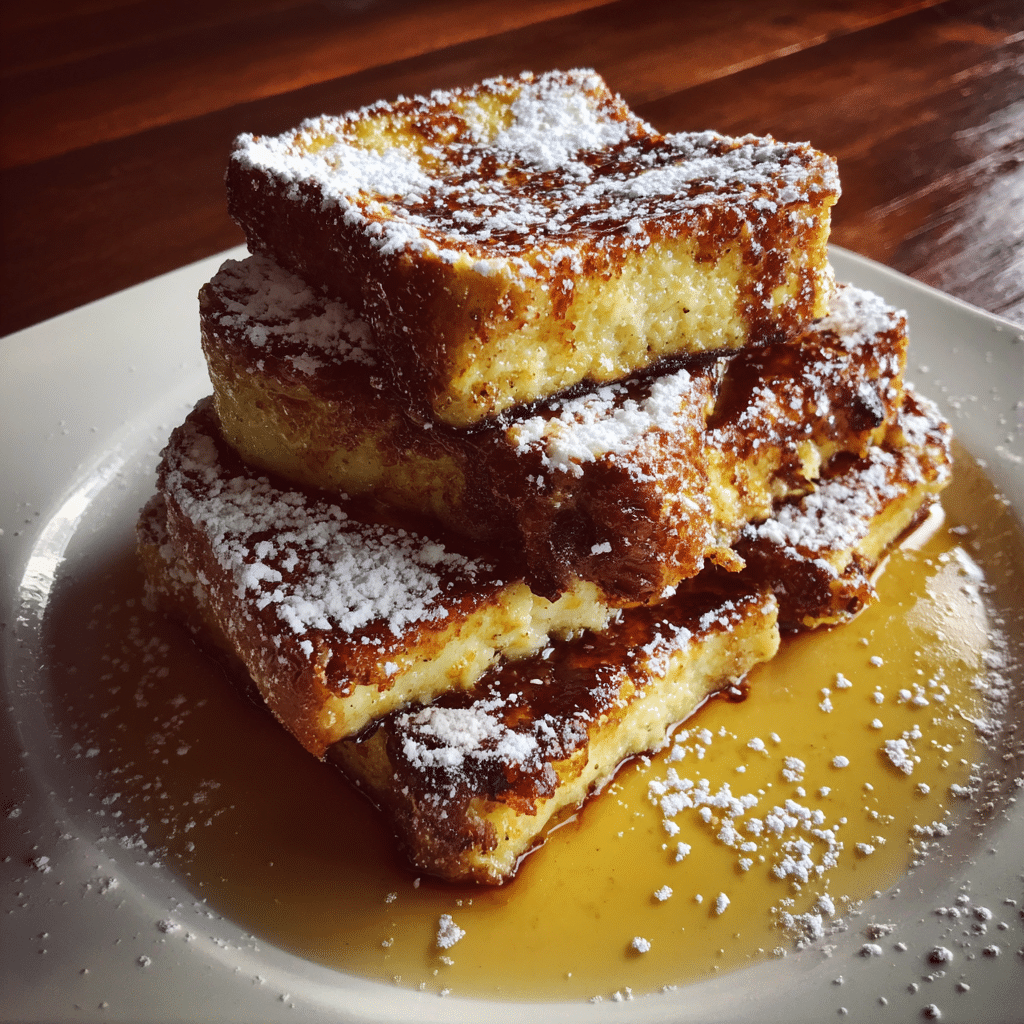
Perfect execution begins before heat meets pan. Proper preparation transforms ordinary ingredients into extraordinary results.
Custard Base Essentials for Crème Brûlée French Toast
In a shallow bowl, combine 4 large eggs (room temperature), 1/2 cup heavy cream, 1/4 cup whole milk, 3 tablespoons granulated sugar, 1 teaspoon vanilla extract, and 1/4 teaspoon freshly grated nutmeg. Whisk vigorously until fully combined and slightly frothy (about 1 minute of continuous whisking). The custard should look pale golden and homogeneous. Don’t skip the room-temperature eggs—cold eggs emulsify poorly and create uneven custard absorption. If you only have cold eggs, submerge them in a bowl of warm water for 8 minutes before cracking.
Bread Preparation Protocol
Slice your bread into 3/4-inch-thick pieces using a serrated knife with a gentle sawing motion rather than pressing down. Pressing crushes the interior and prevents even custard absorption. Arrange slices on a cutting board in the order you’ll cook them this prevents confusion during the cooking process and ensures consistency.
Sugar and Caramelization Prep
You’ll need two types of sugar: the 3 tablespoons already in the custard, plus an additional 2-3 tablespoons of raw cane sugar or demerara sugar for caramelizing. Cane sugar and demerara caramelize more dramatically than granulated white sugar, creating superior color contrast and satisfying crackle. Prepare this on a small plate positioned next to your cooking station for immediate access after cooking.
Butter and Pan Preparation
Use 2 tablespoons unsalted butter for cooking, divided between two batches (1 tablespoon per batch). Clarified butter or ghee works slightly better than conventional butter for the cooking process, as it has a higher smoke point. Have your kitchen torch ready and tested before you begin cooking. A culinary torch is essential a regular lighter won’t work properly for caramelizing sugar.
Step-by-Step Cooking Instructions for Crème Brûlée French Toast
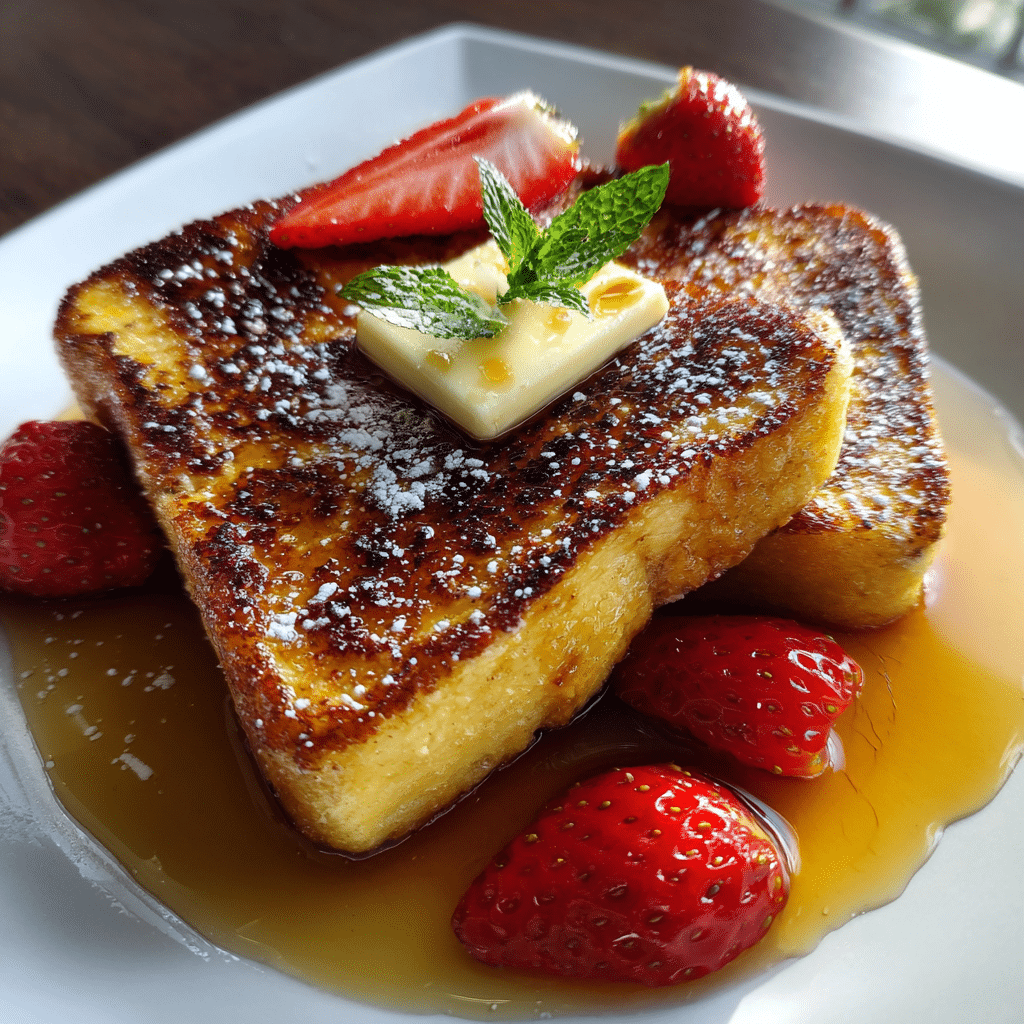
Precision and timing create the magic here. Rushing or skipping steps compromises the final result.
Pre-Cooking Prep for Crème Brûlée French Toast
Bring your custard bowl to your stove and position your non-stick skillet or well-seasoned cast-iron pan over medium heat. Add 1 tablespoon butter and allow it to melt completely and coat the entire pan surface (about 30 seconds). Meanwhile, working quickly, dip each bread slice into the custard bowl exactly 1.5 seconds per side, no longer. Rapid dipping is crucial. Extended soaking creates waterlogged, mushy bread rather than custardy delights. The goal is custard coating, not bread saturation. Place each custard-coated slice directly into your heated pan.
Cooking Method for Crème Brûlée French Toast
Cook each batch of 3-4 slices for exactly 3.5 minutes on the first side without moving them (resist the urge to flip early this develops the golden-brown exterior that serves as the foundation for caramelization). Flip carefully using a thin spatula and cook the second side for 2.5 minutes until light golden brown. The second side cooks faster because the custard has already set. Transfer cooked slices immediately to a wire cooling rack positioned over a baking sheet (this prevents condensation from creating a soggy bottom surface).
Doneness Check for Crème Brûlée French Toast
The bread should be light to medium golden brown, never deep brown or caramelized on the cooking surface (save caramelization for the sugar topping). When you tap the edge with a spatula, it should feel firm and slightly crispy. If it feels soft or spongy, cook an additional 30 seconds on each side.
Caramelizing Sugar for Crème Brûlée French Toast
Working with one slice at a time, sprinkle 1.5-2 teaspoons of demerara or cane sugar across the top surface. Hold your kitchen torch 3-4 inches away from the sugar and apply flame in circular motions, keeping the torch moving constantly to prevent charring. You’re not trying to melt the entire surface you’re creating a brûléed layer. The sugar will initially look wet, then begin darkening to amber (about 20-30 seconds of torching). When the sugar reaches a deep caramel color (almost mahogany, but not black), remove the torch immediately. The residual heat will continue darkening it slightly. Place torched slices on a serving plate immediately.
Pro Tips for Perfect Crème Brûlée French Toast
These expert techniques separate good results from exceptional ones.
Avoiding Soggy or Undercooked Bread
The most common mistake is over-dipping in custard. The custard-dipping window is precisely 1.5 seconds per side not 2 seconds, not 3 seconds. Set a silent timer on your phone if necessary. Underdipping creates dry, disappointing results; overdipping creates soaked mush. Additionally, use day-old bread exclusively. Fresh bread absorbs too much custard and becomes gluey rather than custardy. Finally, place cooked slices on a wire rack immediately after cooking—setting them directly on a plate allows steam condensation to create soggy bottoms within minutes.
Essential Tools for Success
A quality kitchen torch is non-negotiable. Battery-operated culinary torches (typically $15-25) work beautifully and are safer than butane lighters. Don’t attempt this recipe without a proper torch—the final caramelization is the entire point. A shallow dipping bowl allows you to submerge bread quickly without bending or breaking slices. An instant-read thermometer isn’t strictly necessary but helps verify custard temperature if you’re nervous about food safety (pasteurized eggs reach 160°F).
Storage & Make-Ahead Options
Crème brûlée French toast is best consumed immediately after caramelization while the sugar is still crackling and warm. If you must prepare ahead, cook the bread portion through the caramelization step up to 30 minutes ahead, then store on a wire rack at room temperature. Refrigeration creates condensation that destroys the sugar’s structural integrity. Don’t store refrigerated the custard-soaked bread won’t reheat well and the sugar coating becomes sticky rather than crispy.
Flavor Variations for Crème Brûlée French Toast
This recipe’s foundation is stable enough to support sophisticated experimentation. Here are proven variations:
| Variation | Key Changes | Best For |
|---|---|---|
| Classic Vanilla | Standard recipe with Madagascar vanilla extract | Purists, first-time makers, breakfast entertaining |
| Brown Butter Sage | Add 1 Tbsp brown butter to custard + infuse with 3 sage leaves (strain before using) + finish with sea salt flakes | Savory breakfast lovers, fall entertaining, brunch brunches |
| Chai Spice | Add 1/2 tsp cardamom + 1/4 tsp black pepper + 1/8 tsp clove to custard + swap demerara for vanilla sugar | Spice lovers, Indian-inspired entertaining, winter mornings |
| Orange Blossom | Add 1 Tbsp orange liqueur alternative (omit for alcohol-free) + 1/2 tsp orange zest + use orange-infused sugar for caramelizing | Citrus enthusiasts, spring entertaining, bridal brunches |
| Maple Pecan | Add 2 Tbsp pure maple syrup to custard + top caramelized toast with toasted pecans before serving | Fall entertaining, Canadian-inspired menus, holiday breakfasts |
| Espresso Mascarpone | Add 2 Tbsp cold brew coffee to custard + serve with dollop of mascarpone + dust with cocoa powder | Coffee lovers, sophisticated brunches, dessert-for-breakfast occasions |
Serving Suggestions for Crème Brûlée French Toast
Context and accompaniments dramatically elevate the final experience.
Standalone Elegance: Serve immediately after caramelization on a warm plate with nothing but a fork. The sugar crackle and custard-soaked bread need no accompaniment—they’re the entire show. This is the professional approach.
Classic French Approach: Serve with a modest dollop of crème fraîche or Greek yogurt alongside fresh berries (raspberries or strawberries work beautifully). The cool dairy cuts through richness while fruit adds textural contrast and brightness.
Brunch Context: Pair with a light green salad dressed with lemon vinaigrette and crusty bread for soaking up any custard that escapes your plate. Add a simple fruit salad with fresh mint for complete brunch presentation.
Dessert Presentation: Serve as an elegant brunch or early-dinner dessert. The French toast becomes the main course rather than breakfast. Add a small glass of sparkling water or a warm cup of herbal tea for complete dining experience.
Indulgent Weekend: Top with a small scoop of vanilla ice cream immediately after caramelization—the hot bread melts the ice cream while the cold ice cream cools the hot sugar, creating textural drama and temperature play.
Frequently Asked Questions About Crème Brûlée French Toast
Can I prepare this ahead and reheat? Cooked crème brûlée French toast doesn’t reheat successfully. The sugar loses its crackle, the custard becomes gluey, and the bread dries out. You can prepare the custard up to one day ahead (cover and refrigerate), and slice bread the morning of serving, but cook and caramelize immediately before eating.
What if I don’t have a kitchen torch? A kitchen torch is genuinely essential for this recipe. The caramelized sugar exterior is the entire point. You cannot achieve proper caramelization under a broiler without scorching the bread. Consider this recipe a motivation to purchase an inexpensive culinary torch ($15-25) it’s one of the most useful kitchen tools you can own.
Is this safe to eat with raw egg custard? The custard reaches approximately 160°F during the cooking process, which pasteurizes it. If you’re nervous about food safety, use pasteurized eggs (available at most grocery stores). Pregnant women should use pasteurized eggs as a precaution.
Can I use egg substitute for this recipe? No. Egg substitute doesn’t provide the same custard structure and results in a completely different texture. Traditional eggs are non-negotiable for this recipe’s success.
What if the sugar doesn’t caramelize properly with my torch? Your torch may be running low on fuel. Test the flame strength on a piece of cardboard first—if it’s weak and yellow rather than bright blue, refill or replace the torch. Ensure you’re holding the torch 3-4 inches away and moving in circular motions. Don’t stay in one spot.
Can I make this recipe gluten-free? Yes. Use any quality gluten-free brioche or challah (many bakeries now offer these). The custard and caramelization process work identically with gluten-free bread.
Why is my custard not soaking into the bread? Either your bread is too fresh (let it age overnight) or your dipping time is too brief (1.5 seconds per side is the minimum). If bread is old enough and you’re dipping properly, the issue might be overly thick bread slices. Slice to exactly 3/4 inch thick.
Can I use this recipe for a crowd? Absolutely. The recipe serves 4 people comfortably (2 slices each). To serve 8 people, simply double all quantities. Cook in batches and caramelize each batch while cooking the next. Keep finished slices warm on a baking sheet in a 200°F oven (but serve within 10 minutes for optimal sugar crackle).
Conclusion
Crème brûlée French toast represents everything I love about cooking: taking familiar classics and elevating them into something unexpected and magnificent. This recipe has earned permanent status in my kitchen, and I’m confident it will do the same in yours.
If you found this recipe helpful, we encourage you to share it with your network or save it for future use.
We’d be delighted to see your unique creations feel free to share your photos with us pinterest
Print
Ultimate Crème Brûlée French Toast Recipe 5 Star Elegance
- Total Time: 55 minutes (plus chilling time)
- Yield: 8 servings 1x
- Diet: Vegetarian
Description
Crème Brûlée French Toast is a decadent breakfast dish featuring thick slices of brioche soaked in a rich vanilla custard, baked until golden, and topped with a crisp caramelized sugar layer reminiscent of classic crème brûlée.
Ingredients
1 loaf brioche or challah bread, cut into 1-inch slices
1/2 cup unsalted butter
1 cup light brown sugar
2 tbsp corn syrup
6 large eggs
2 cups half-and-half or heavy cream
1 tsp pure vanilla extract
1/2 tsp salt
1/2 tsp cinnamon (optional)
1/4 cup granulated sugar (for topping)
Instructions
1. Preheat oven to 350°F (175°C). Grease a 9×13-inch baking dish.
2. In a small saucepan, melt butter with brown sugar and corn syrup over medium heat until smooth and bubbly.
3. Pour caramel mixture into the bottom of the prepared baking dish.
4. Arrange bread slices evenly over the caramel layer.
5. In a large bowl, whisk together eggs, half-and-half, vanilla, salt, and cinnamon.
6. Pour custard mixture evenly over the bread, pressing lightly so it soaks in.
7. Cover and refrigerate for at least 2 hours, or overnight for best flavor.
8. Bake uncovered for 35–40 minutes, until golden and puffed.
9. Let cool slightly, then sprinkle granulated sugar evenly over the top.
10. Use a kitchen torch to caramelize the sugar until crisp and amber.
11. Serve warm with fresh berries or a dusting of powdered sugar.
Notes
Prepare the night before for an easy make-ahead brunch.
Use heavy cream for a richer custard texture.
Add a splash of orange liqueur or a pinch of nutmeg for extra flavor.
If you don’t have a torch, broil the top for 1–2 minutes — watch closely to avoid burning.
- Prep Time: 15 minutes
- Cook Time: 40 minutes
- Category: Breakfast
- Method: Baked
- Cuisine: French-American
Nutrition
- Serving Size: 1 slice
- Calories: 420
- Sugar: 35
- Sodium: 210
- Fat: 22
- Saturated Fat: 13
- Unsaturated Fat: 8
- Trans Fat: 0
- Carbohydrates: 45
- Fiber: 1
- Protein: 8
- Cholesterol: 165
Keywords: crème brûlée french toast, baked french toast, caramel french toast, brunch recipe, make ahead breakfast