
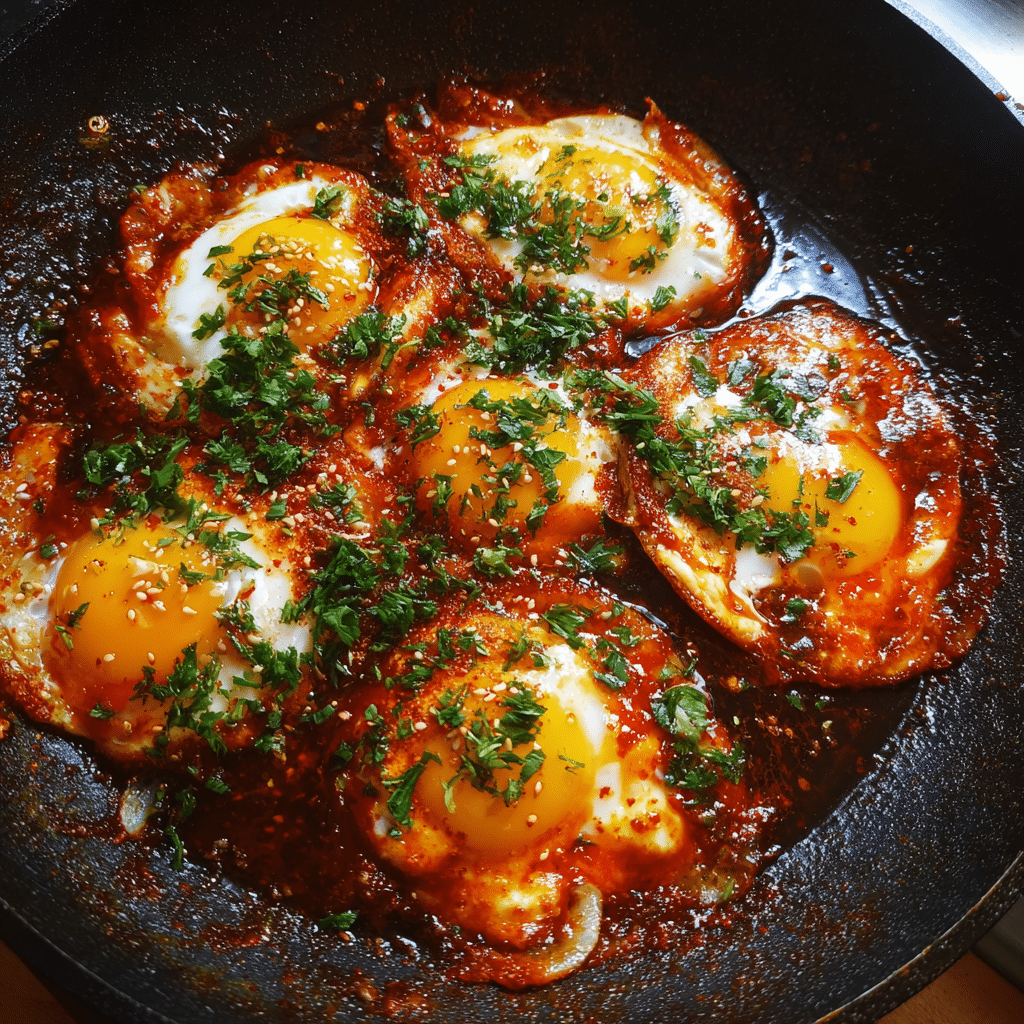
Korean Eggs Recipe if you’re tired of boring scrambled eggs that taste the same every single morning, or frustrated with breakfast that lacks excitement and flavor, I completely understand. I’m Simon, and after years of exploring global cuisines and transforming simple ingredients into extraordinary meals, I can tell you that this spicy, umami-rich Korean egg dish will revolutionize your breakfast routine forever.
This Korean Eggs Recipe delivers an explosion of bold flavors: silky eggs cooked to perfection with spicy gochujang, aromatic sesame oil, and savory soy sauce, creating a dish that’s equally at home for breakfast, lunch, or dinner. Picture this: fluffy, slightly runny eggs with a gorgeous orange hue, spicy-sweet heat balanced with nutty richness, all ready in just 10 minutes. It’s the kind of dish that makes you excited to wake up in the morning.
As someone who’s dedicated my culinary career to making restaurant-quality food accessible to home cooks, I’ve learned that the simplest dishes often pack the biggest flavor punch. Working alongside my incredible team Megan Carter, who helped perfect the egg texture and timing, Jackson Reed, whose understanding of heat levels ensured the perfect spice balance, and Olivia Brooks, who makes every plate of these gorgeous eggs look irresistible we’ve tested this recipe dozens of times to guarantee foolproof results.
Today, I’m sharing everything you need to know: selecting the freshest eggs, understanding gochujang and Korean flavor profiles, mastering various cooking techniques, and creating the perfect texture. Whether you’re new to Korean cooking, looking for quick protein-packed meals, or simply want to elevate your egg game, this vibrant recipe will become your new obsession.
Why This Korean Eggs Recipe Works
There’s a reason this Korean Eggs Recipe has become the most-requested breakfast in my kitchen. Here’s what makes it absolutely irresistible:
- Uses affordable, everyday ingredients – eggs, gochujang, and pantry staples available at most grocery stores
- Ready in just 10 minutes from start to finish, making it perfect for busy mornings
- Incredibly versatile – serve for breakfast, lunch, dinner, or as a topping for rice bowls
- Protein-packed meal with 12g+ protein per serving to keep you satisfied for hours
- Naturally gluten-free when using certified gluten-free gochujang and tamari
- Budget-friendly – costs less than $2 per serving while tasting like restaurant food
- Meal prep champion – make the sauce ahead and cook fresh eggs in minutes all week
- Customizable heat level – adjust spice to match your exact preference
Choosing the Right Eggs for Your Korean Eggs Recipe
The foundation of an outstanding Korean Eggs Recipe starts with selecting quality eggs and understanding how freshness impacts your final dish.
Best Egg Types for This Korean Eggs Recipe
For this Korean Eggs Recipe, egg quality dramatically affects flavor and texture:
Fresh Large Eggs (Most Recommended):
- Best for: Rich flavor, vibrant orange yolks, best texture
- Why they work: Fresher eggs have firmer whites that hold together better during cooking
- Pro tip: Check freshness by placing in water fresh eggs sink, old eggs float
Pasture-Raised or Free-Range Eggs:
- Best for: Superior flavor, deeper yolk color, better nutrition
- Why they work: Darker yolks create more vibrant color in finished dish
- Pro tip: Worth the extra cost for this simple recipe where egg flavor shines
Organic Eggs:
- Best for: Avoiding pesticides, supporting sustainable farming
- Why they work: Often fresher at stores due to higher turnover
- Pro tip: Check carton dates and buy from refrigerated section only
Buying Tips for Your Korean Eggs Recipe
When shopping for eggs to use in this Korean Eggs Recipe, keep these guidelines in mind:
- Check expiration dates and choose cartons with the latest dates for maximum freshness
- Open carton and inspect – no cracks, leaks, or stuck eggs (indicates old age)
- Look for clean shells without dirt, feathers, or excessive debris
- Check for cold temperature – eggs should be refrigerated at store, not room temperature
- Buy from high-turnover stores where eggs move quickly for freshest supply
- Consider local farms if available – farm-fresh eggs have incredible flavor
Substitutions for This Korean Eggs Recipe
While this Korean Eggs Recipe is designed for chicken eggs, you can adapt it:
- Use duck eggs for richer, creamier texture and larger portion size
- Try liquid egg whites for lower-cholesterol version (reduce cooking time slightly)
- Substitute with tofu scramble for vegan version using crumbled firm tofu
- Use quail eggs for elegant appetizer portions (reduce cooking time to 3-4 minutes)
Ingredients & Prep for This Korean Eggs Recipe
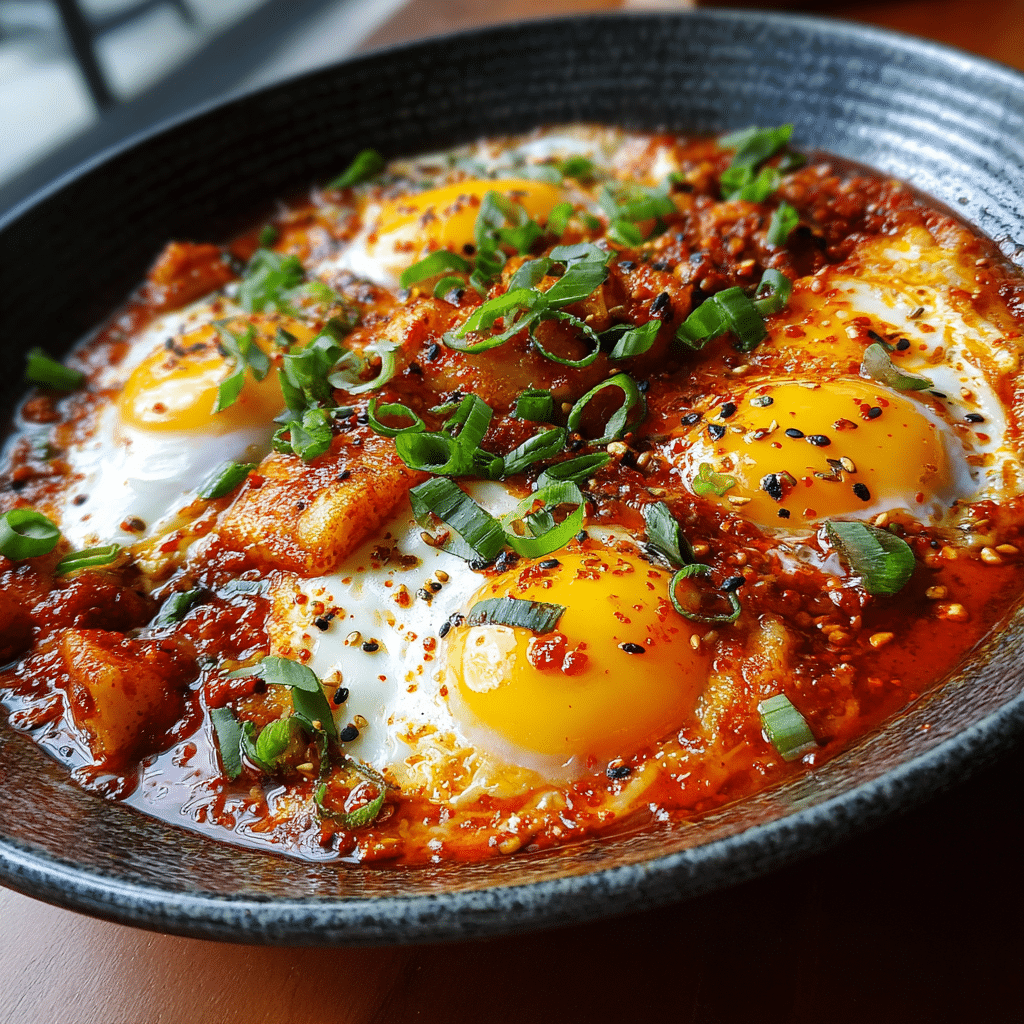
Egg Prep Essentials for Your Korean Eggs Recipe
Proper preparation ensures perfect Korean Eggs Recipe results:
For the Eggs:
- 4 large eggs
- Small bowl for cracking
- Whisk or fork for beating
- Room temperature eggs (remove from fridge 15 minutes before cooking)
Preparation Steps:
- Remove eggs from refrigerator and let sit 15 minutes at room temperature
- Crack eggs into small bowl to check for shells and ensure no bad eggs
- Beat eggs gently with whisk or fork until yolks and whites are fully combined
- Season lightly with pinch of salt before cooking
Gochujang Sauce for Korean Eggs Recipe
Create the signature spicy-sweet sauce that defines this Korean Eggs Recipe:
Sauce Ingredients:
- 1 tablespoon gochujang (Korean red chili paste)
- 1 tablespoon soy sauce (or tamari for gluten-free)
- 1 teaspoon sesame oil
- 1 teaspoon honey or sugar
- 1 clove garlic, minced
- 1/4 teaspoon black pepper
Sauce Instructions:
- Whisk all sauce ingredients together in small bowl until smooth
- Taste and adjust spice level (more gochujang) or sweetness (more honey) as desired
- Sauce can be made 1 week ahead and stored refrigerated in airtight container
- Let sauce come to room temperature before adding to eggs
Pantry Staples for Korean Eggs Recipe Success
Round out your Korean Eggs Recipe with these essential elements:
Cooking Essentials:
- 1 tablespoon neutral oil (vegetable, canola, or avocado)
- 1 tablespoon butter (optional, for extra richness)
- Pinch of salt
Garnishes and Toppings:
- 1 green onion, thinly sliced
- 1 teaspoon sesame seeds (white or black)
- Fresh cilantro or Korean perilla leaves (optional)
- Extra sesame oil for drizzling
- Nori seaweed strips (optional)
Step-by-Step Cooking Instructions for This Korean Eggs Recipe
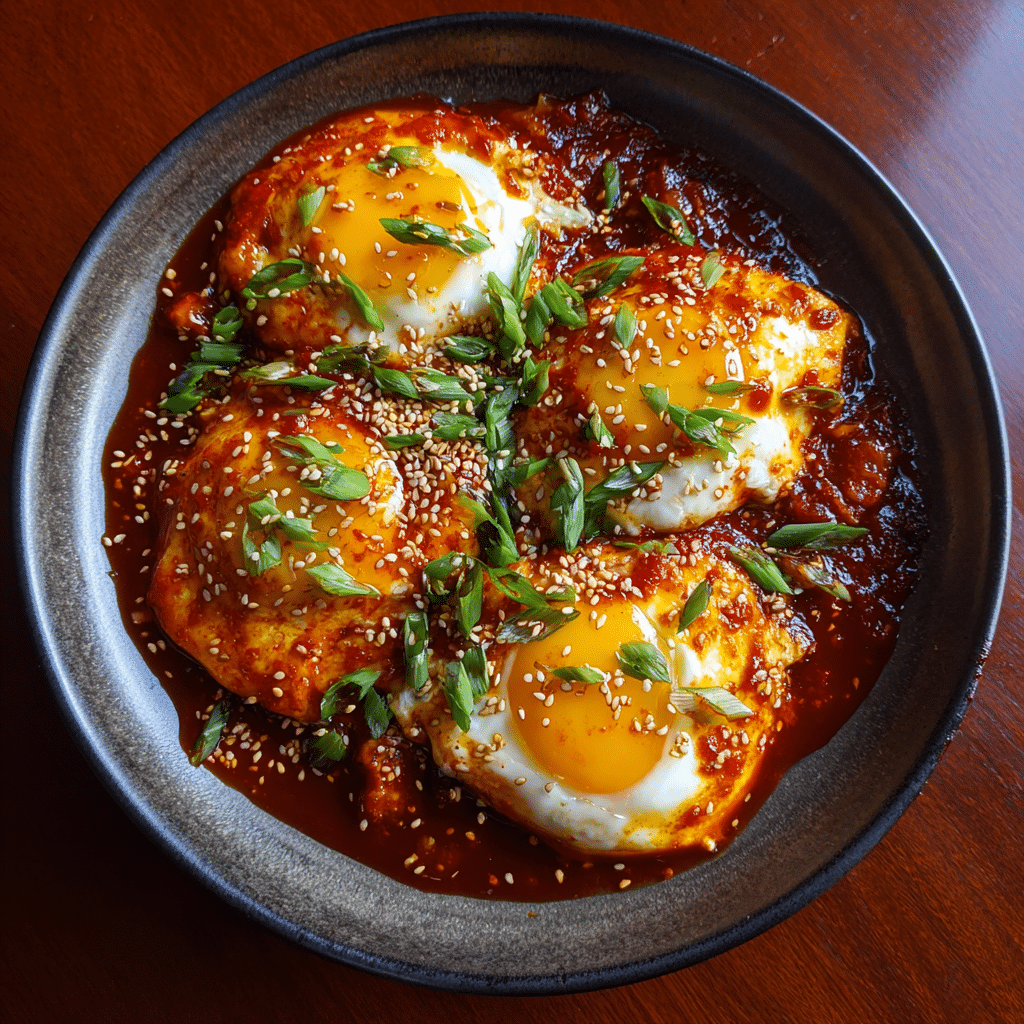
Follow this proven method for the most flavorful, perfectly cooked Korean Eggs Recipe every single time.
Pre-Cooking Prep for Your Korean Eggs Recipe
Before you start cooking, proper preparation ensures success with this Korean Eggs Recipe:
- Bring eggs to room temperature – 15 minutes out of fridge prevents cold eggs from cooling pan
- Make gochujang sauce and have it ready in small bowl next to stove
- Prep all garnishes – slice green onions, measure sesame seeds, chop cilantro
- Beat eggs thoroughly until no streaks of white remain
- Heat pan properly – medium-low heat is key for creamy, not rubbery, eggs
- Have serving plate ready – eggs continue cooking after leaving pan
Cooking Method for Your Korean Eggs Recipe
Master the technique for perfect Korean Eggs Recipe results:
- Heat non-stick skillet over medium-low heat and add oil (and butter if using)
- Test pan temperature by adding drop of water it should sizzle gently, not violently
- Pour beaten eggs into pan and let sit undisturbed for 20-30 seconds
- Begin gentle stirring using rubber spatula, pushing eggs from edges to center
- Create soft curds by stirring slowly and patiently don’t rush this process
- Add gochujang sauce when eggs are 70% cooked but still very wet and glossy
- Fold sauce gently into eggs without overmixing you want beautiful orange swirls
- Remove from heat early when eggs still look slightly undercooked they’ll finish cooking from residual heat
Doneness Check for Your Korean Eggs Recipe
Perfectly cooked Korean Eggs Recipe requires careful timing:
- Visual cues: Eggs should be soft, creamy, and slightly glossy with some liquid remaining
- Texture test: Eggs should jiggle slightly when pan is shaken gently
- Color check: Beautiful orange hue from gochujang with some yellow egg visible
- Timing guidelines:
- Scrambled style: 3-4 minutes total cooking time
- Soft curds: Remove when 80% set
- Firmer style: 5-6 minutes for fully set eggs
- Don’t overcook – eggs continue cooking after leaving pan; undercooked is better than overcooked
Plating Your Korean Eggs Recipe
The final step for beautiful Korean Eggs Recipe presentation:
- Transfer immediately to serving plate to stop cooking process
- Garnish generously with sliced green onions and sesame seeds
- Drizzle sesame oil over top for extra aroma and richness
- Add optional toppings like nori strips or cilantro for visual appeal
- Serve immediately while eggs are hot and at peak creaminess
- Pair with rice or toast for complete meal
Pro Tips for Perfect Korean Eggs Recipe
Avoiding Common Mistakes with Korean Eggs Recipe
The biggest challenges with this Korean Eggs Recipe are overcooking and wrong heat level:
- Use medium-LOW heat – high heat creates rubbery, dry eggs with tough texture
- Remove from heat early – eggs continue cooking from residual heat after leaving pan
- Don’t overstir – excessive stirring creates tiny, tight curds instead of soft, creamy folds
- Add sauce at right time – too early dilutes eggs, too late doesn’t incorporate well
- Use non-stick pan – prevents sticking and allows you to cook with less fat
- Work quickly but gently – eggs go from perfect to overcooked in seconds
- Don’t walk away – eggs require constant attention for best results
Tool Recommendations for Korean Eggs Recipe Success
Invest in these items for consistently excellent Korean Eggs Recipe results:
- Quality non-stick skillet (8-10 inch) – essential for perfect egg texture
- Heat-resistant rubber spatula – allows gentle folding without scratching pan
- Small whisk – incorporates air for fluffier eggs
- Prep bowls – have everything measured and ready before cooking
- Timer – helps prevent overcooking while multitasking
- Microplane grater – for fresh garlic in sauce
Storage & Meal Prep for Your Korean Eggs Recipe
Maximize convenience with these Korean Eggs Recipe strategies:
Sauce Preparation:
- Make gochujang sauce up to 1 week ahead and refrigerate
- Double or triple sauce recipe for multiple quick breakfasts
- Store in small jar or squeeze bottle for easy dispensing
- Bring to room temperature before using
Egg Storage:
- Best eaten immediately, but can be refrigerated up to 2 days
- Reheat gently in microwave at 50% power in 15-second intervals
- Eggs may release some water when reheated drain before serving
- Texture is best fresh, but flavor remains excellent
Meal Prep Strategy:
- Prep sauce and garnishes on Sunday for quick weekday breakfasts
- Pre-portion eggs into containers (4 eggs = 2 servings)
- Cook fresh each morning in just 5 minutes for best texture
- Prep rice or toast ahead to complete the meal
Flavor Variations for This Korean Eggs Recipe
Customize this Korean Eggs Recipe to match any craving or dietary preference.
Extra Spicy Korean Eggs Recipe
Turn up the heat on your Korean Eggs Recipe:
- Add 1/2 teaspoon gochugaru (Korean red pepper flakes) to sauce
- Include fresh sliced jalapeño or serrano peppers
- Drizzle with Korean spicy oil (rayu) before serving
- Top with kimchi for fermented heat and crunch
Protein-Packed Korean Eggs Recipe
Boost nutrition in your Korean Eggs Recipe:
- Add 1/4 cup cottage cheese to beaten eggs for creaminess and protein
- Stir in cooked chicken breast or tofu cubes
- Top with edamame or steamed soybeans
- Serve over quinoa instead of rice for complete protein
Korean Eggs Recipe Flavor Variations
| Variation | Key Additions | Best Served With |
|---|---|---|
| Cheese Lover’s | Add shredded mozzarella or cheddar cheese | Toast, English muffins |
| Veggie-Loaded | Mix in spinach, mushrooms, bell peppers | Brown rice, grain bowls |
| Breakfast Bowl | Serve over rice with avocado and nori | Miso soup, pickled vegetables |
| Mild Version | Reduce gochujang, add more honey | Plain rice, cucumber salad |
| Herb Garden | Add cilantro, chives, perilla leaves | Lettuce wraps, rice cakes |
Serving Suggestions for Your Korean Eggs Recipe
Elevate your Korean Eggs Recipe with these perfect pairings and presentations.
Perfect Side Dishes
This Korean Eggs Recipe pairs beautifully with:
- Steamed white rice – classic pairing that soaks up spicy sauce perfectly
- Korean banchan – small side dishes like kimchi, seasoned spinach, pickled radish
- Crispy toast – buttered sourdough or whole grain for Western-style breakfast
- Fresh vegetables – sliced cucumber, lettuce cups, cherry tomatoes
- Seaweed soup – light, savory soup complements rich eggs
Beverage Pairings
Complement your Korean Eggs Recipe with:
- Hot green tea – cuts richness and refreshes palate
- Barley tea (boricha) – traditional Korean beverage, served hot or cold
- Fresh orange juice – bright acidity balances spicy heat
- Iced coffee – Korean-style sweet iced coffee pairs surprisingly well
- Cold milk – soothes spice and adds creaminess
Meal Planning Ideas
Transform your Korean Eggs Recipe into complete meals:
- Quick breakfast: Serve over toast with sliced avocado
- Lunch bowl: Layer over rice with vegetables and kimchi
- Dinner protein: Pair with stir-fried vegetables and soup
- Brunch spread: Serve alongside other small plates and banchan
- Meal prep: Make sauce ahead for instant gourmet breakfasts all week
FAQs About This Korean Eggs Recipe
Can I make this Korean Eggs Recipe less spicy?
Yes! Reduce spice in your Korean Eggs Recipe by using only 1-2 teaspoons gochujang instead of 1 tablespoon, or substitute with sweet gochujang (which has less heat). You can also add extra honey to balance the spice without reducing the gochujang flavor.
What is gochujang and where do I find it for this Korean Eggs Recipe?
Gochujang is Korean fermented red chili paste, essential for authentic Korean Eggs Recipe flavor. Find it at Asian grocery stores, well-stocked supermarkets, or online. Popular brands include Chung Jung One and Mother-in-Law’s. It keeps refrigerated for months after opening.
Is this Korean Eggs Recipe safe for pregnant women?
Yes! This Korean Eggs Recipe is completely safe for pregnant women when eggs are cooked until no longer runny (firm, not soft). Ensure eggs reach at least 160°F internal temperature. All other ingredients are pregnancy-safe.
Can I make this Korean Eggs Recipe dairy-free?
This Korean Eggs Recipe is naturally dairy-free if you omit the optional butter! Use only oil for cooking. The eggs, gochujang sauce, and all garnishes contain no dairy. Perfect for lactose-intolerant individuals.
How do I prevent my Korean Eggs Recipe from being rubbery?
Rubbery eggs in your Korean Eggs Recipe result from cooking over too-high heat or overcooking. Use medium-LOW heat, stir gently and slowly, and remove from heat when eggs are still slightly wet and glossy. They finish cooking from residual heat.
Can I use egg whites only for this Korean Eggs Recipe?
Yes, but texture and color will differ in your Korean Eggs Recipe. Use 6-8 egg whites to replace 4 whole eggs. Cook time is slightly shorter (2-3 minutes). Egg whites create fluffier but less rich texture, and color will be lighter orange.
What can I substitute for gochujang in this Korean Eggs Recipe?
If you can’t find gochujang for your Korean Eggs Recipe, mix together 1 tablespoon sriracha, 1 teaspoon miso paste, and 1/2 teaspoon sugar as emergency substitute. Won’t be exactly the same but provides similar spicy-sweet-fermented flavor profile.
Conclusion
This Korean Eggs Recipe has transformed boring breakfast routines for thousands of home cooks who were tired of the same old eggs, and now it’s your turn to experience the magic of this vibrant, flavor-packed dish. Whether you’re cooking quick weekday breakfasts, impressing brunch guests, or simply craving something exciting and delicious, these spicy gochujang eggs deliver every single time.
Print
Korean Eggs Recipe 5 Secrets for Perfect Spicy Gochujang Eggs
- Total Time: 17 mins
- Yield: 2 servings 1x
Description
Fluffy, savory, and slightly sweet, this Korean Eggs Recipe (Gyeran Jjim) creates soft steamed eggs that are light and custardy — a comforting side dish or simple breakfast staple in Korean cuisine.
Ingredients
4 large eggs
1/2 cup water or chicken broth
1/4 tsp salt (adjust to taste)
1/2 tsp sesame oil
1 green onion, finely chopped
Optional toppings: toasted sesame seeds, chili flakes, or nori strips
Instructions
1. In a medium bowl, whisk eggs, water (or broth), salt, and sesame oil until well combined and smooth.
2. Strain the mixture through a fine sieve for an extra silky texture (optional).
3. Pour the egg mixture into a heatproof bowl that fits inside a steamer.
4. Fill a pot with water (about 1 inch deep) and bring to a gentle simmer.
5. Place the bowl in the pot, cover with a lid, and steam over low heat for 10–12 minutes.
6. Check for doneness — the eggs should be just set and slightly jiggly.
7. Top with chopped green onion, sesame seeds, or chili flakes before serving.
8. Serve warm as a side dish with rice or as a light breakfast.
Notes
For a richer flavor, use chicken broth instead of water.
Avoid boiling the water too hard or the eggs will become rubbery.
You can add diced vegetables or small shrimp for variation.
- Prep Time: 5 mins
- Cook Time: 12 mins
- Category: Breakfast / Side Dish
- Method: Steamed
- Cuisine: Korean
Nutrition
- Serving Size: 1 bowl
- Calories: 130
- Sugar: 0g
- Sodium: 280mg
- Fat: 9g
- Saturated Fat: 2g
- Unsaturated Fat: 6g
- Trans Fat: 0g
- Carbohydrates: 1g
- Fiber: 0g
- Protein: 11g
- Cholesterol: 285mg
Keywords: Korean eggs, gyeran jjim, steamed eggs, Korean side dish, fluffy eggs recipe