
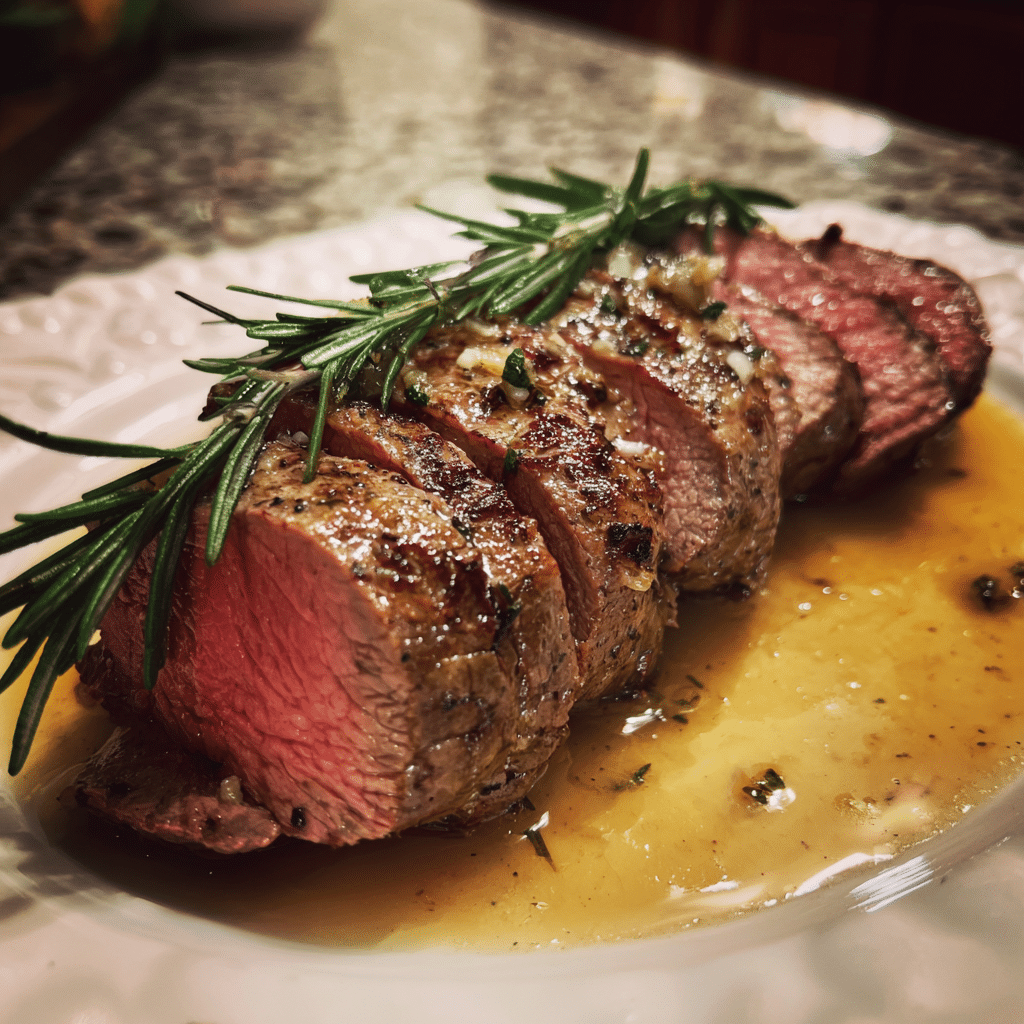
Tired of serving expensive beef tenderloin that turns out dry, flavorless, and disappointing? This Garlic Rosemary Beef Tenderloin will change everything you thought you knew about cooking this premium cut. Hi there, I’m Simon, and I’ll never forget the first time Jackson Reed, our grill master, taught me the secret to perfectly roasted tenderloin. It was a cold December evening, and we were testing recipes for a holiday feature. The moment we sliced into that first roast with its perfectly pink center, golden brown crust, and intoxicating aroma of garlic and fresh rosemary we knew we’d mastered something truly special.
This Garlic Rosemary Beef Tenderloin delivers restaurant-quality results with surprisingly simple techniques. The meat emerges from the oven with a caramelized herb crust on the outside and buttery, melt-in-your-mouth tenderness on the inside. As someone who’s spent years perfecting classic comfort food with elevated techniques, I can promise you this: even if you’ve never cooked a tenderloin before, this recipe will make you look like a culinary genius.
In this comprehensive guide, you’ll discover everything from selecting the perfect tenderloin at the butcher counter to achieving precise doneness every single time. I’ll share insider tips for maximizing flavor, reveal time-tested techniques from professional kitchens, and answer all your burning questions about this show-stopping centerpiece.
Why This Garlic Rosemary Beef Tenderloin Recipe Works
This Garlic Rosemary Beef Tenderloin has earned its reputation as a foolproof special-occasion recipe, and the reasons go far beyond just impressive presentation.
- Simple ingredient list – Uses easy-to-find fresh herbs and pantry staples you likely already have
- Quick prep time – Just 15 minutes of active preparation before it goes in the oven
- Consistent results – Reverse-sear method ensures edge-to-edge perfect doneness
- Impressive presentation – Looks like something from a five-star steakhouse
- Naturally tender – Tenderloin requires no marinating or special tenderizing techniques
- Feeds a crowd – One 3-4 lb roast serves 8-10 people generously
- Make-ahead friendly – Prep the herb crust hours in advance and roast when ready
- Versatile timing – Perfect for holiday dinners, anniversaries, or Sunday suppers
Choosing the Right Meat for Garlic Rosemary Beef Tenderloin
Selecting the perfect beef tenderloin is absolutely crucial for this Garlic Rosemary Beef Tenderloin recipe. This premium cut deserves careful consideration at the butcher counter.
Best Cuts for This Recipe
Whole Beef Tenderloin (Untrimmed): This is the most economical option if you’re comfortable with basic butchering. A whole untrimmed tenderloin weighs 6-7 lbs before trimming and includes the chain (a strip of meat running along one side) and a thick layer of fat and silverskin. You’ll trim away about 2 lbs, leaving you with a 4-5 lb roast. While this requires more work, it’s significantly cheaper per pound.
Center-Cut Beef Tenderloin (Trimmed): This is my recommended option for most home cooks. It’s the middle section of the tenderloin already trimmed of fat and silverskin, with even thickness from end to end for uniform cooking. A 3-4 lb center-cut tenderloin is ideal for 8-10 people. Jackson always says this cut is worth the premium price because it eliminates guesswork and waste.
Chateaubriand: This is the thickest part of the center-cut tenderloin, typically 2-3 lbs and serving 4-6 people. It’s perfect for smaller gatherings and provides the most uniform cooking because of its consistent thickness. The name sounds fancy, but it’s simply the best portion of the tenderloin.
Filet Mignon Roast: Some butchers sell the tenderloin in sections labeled as “filet mignon roast.” This is essentially the same as center-cut tenderloin. Don’t be confused by the terminology if it’s a solid piece of tenderloin rather than individual steaks, it’s perfect for this recipe.
Buying Tips
Color and Marbling: Look for beef with a deep cherry-red color not bright red or brownish. The meat should have fine marbling (thin white lines of fat throughout) rather than large chunks of fat. While tenderloin is naturally lean, subtle marbling adds flavor and moisture. Avoid meat with rainbow-colored iridescence, which indicates age.
Grade Matters: Choose USDA Choice or Prime grade for best results. Prime has more marbling and will be more flavorful and juicy, though Choice works beautifully too. Select grade tenderloin, while cheaper, lacks the flavor and tenderness that makes this cut special. For a splurge-worthy occasion, Prime is absolutely worth it.
Ask Your Butcher: Request a center-cut tenderloin with the silverskin already removed and the roast tied at 2-inch intervals. The tying helps maintain an even shape during cooking. Most butchers are happy to do this at no extra charge. Also ask them to trim it to your desired weight they can usually get closer to your target than pre-packaged options.
Thickness Check: The roast should have relatively uniform thickness. If one end is noticeably thinner (called the “tail”), ask the butcher to fold it under and tie it, creating a more even roast. This prevents the thin end from overcooking while the thick end reaches temperature.
Meat Substitutions
Beef Strip Loin (New York Strip Roast): While not as tender as tenderloin, a boneless strip loin roast works with this recipe and costs about 40% less. It has more beefy flavor due to higher fat content. Cook it to the same temperatures using the same method.
Tri-Tip Roast: For a budget-friendly alternative, tri-tip (2-3 lbs) delivers great flavor at a fraction of the cost. It’s not as tender, so slice it thinly against the grain after resting. Reduce cooking time by about 10 minutes since it’s a smaller roast.
Top Sirloin Roast: Another economical option that pairs beautifully with the garlic-rosemary treatment. It’s leaner than strip loin but more affordable than tenderloin. Use a meat thermometer and pull it at 130°F for medium-rare since it can dry out if overcooked.
Venison Tenderloin: For wild game enthusiasts, venison tenderloin is exceptional with this herb crust. It’s even leaner than beef, so watch temperatures carefully and consider wrapping it partially in strips during roasting to add moisture.
Ingredients & Prep for Garlic Rosemary Beef Tenderloin

Proper preparation transforms good tenderloin into extraordinary Garlic Rosemary Beef Tenderloin. Here’s everything you need and how to handle each component.
Meat Prep Essentials
For the Beef:
- 1 whole center-cut beef tenderloin (3½-4 lbs), trimmed and tied
- 2 tablespoons olive oil
- 1 tablespoon coarse kosher salt
- 1 tablespoon freshly ground black pepper
For the Garlic Rosemary Crust:
- 8-10 cloves garlic, minced (about ¼ cup)
- 3 tablespoons fresh rosemary, finely chopped
- 2 tablespoons fresh thyme leaves
- 2 teaspoons Dijon mustard
- 3 tablespoons olive oil
- 1 teaspoon coarse sea salt
- 1 teaspoon freshly cracked black pepper
- Zest of 1 lemon (optional, but adds brightness)
Essential Prep Steps:
Trimming: If your tenderloin isn’t fully trimmed, remove the silverskin the thin, silvery membrane on the surface. Slide a sharp knife under it, angle the blade slightly upward, and slice it away in strips. Silverskin doesn’t break down during cooking and creates tough, chewy spots. Remove any large chunks of exterior fat, but leave thin fat marbling intact.
Tying: If your butcher hasn’t tied the roast, do it yourself using kitchen twine at 2-inch intervals. This maintains a uniform cylindrical shape, ensuring even cooking. If the tail end (thinner end) is significantly smaller, fold it underneath and tie it in place.
Tempering: Remove the tenderloin from the refrigerator 45-60 minutes before cooking. Bringing meat to room temperature ensures more even cooking. Cold meat from the fridge hits the hot oven and the exterior overcooks before the center comes to temperature. Pat the meat completely dry with paper towels – moisture prevents proper browning.
Herb Crust Preparation
In a small bowl, combine minced garlic, chopped rosemary, thyme leaves, Dijon mustard, olive oil, salt, pepper, and lemon zest if using. Mix into a thick paste. The mustard acts as a binder, helping the herbs adhere to the meat while adding a subtle tangy note that cuts through the richness of the beef.
Garlic Tip: Mince the garlic finely rather than using a press. Pressed garlic can burn more easily during the high-heat searing. Megan discovered that letting the herb paste sit for 10-15 minutes before applying allows the flavors to meld – the garlic mellows slightly and the rosemary oils are released.
Fresh vs. Dried Herbs: Always use fresh rosemary and thyme for this recipe. Dried herbs don’t have the same aromatic intensity and can taste dusty when applied as a crust. Fresh herbs create a fragrant, resinous crust that’s absolutely intoxicating.
Pantry Staples
High-Quality Olive Oil: Use extra-virgin olive oil for the herb paste and regular olive oil for searing. The extra-virgin adds fruity, peppery notes that complement the herbs beautifully. Don’t use your most expensive bottle since high heat can destroy delicate flavor compounds, but don’t use bottom-shelf either.
Coarse Salt: Kosher salt or sea salt provides better texture and control than table salt. The larger crystals are easier to see and distribute evenly. If using table salt, reduce quantities by about 25% since it’s denser.
Fresh Black Pepper: Grind pepper fresh from a pepper mill right before using. Pre-ground pepper loses its volatile oils quickly and tastes flat. Freshly ground pepper has a sharp, aromatic bite that transforms the crust.
Dijon Mustard: This is the secret ingredient many home cooks skip. It helps the herb crust stick to the meat, adds subtle acidity, and contributes to that gorgeous golden-brown color during roasting.
Step-by-Step Cooking Instructions for Garlic Rosemary Beef Tenderloin

Follow these detailed steps for perfect Garlic Rosemary Beef Tenderloin every single time.
Pre-Cooking Prep for Garlic Rosemary Beef Tenderloin
Remove the tenderloin from refrigeration 45-60 minutes before cooking and pat it completely dry with paper towels. This step is crucial moisture is the enemy of a good sear. Place the roast on a wire rack set over a baking sheet and let it come to room temperature. Meanwhile, position an oven rack in the center of your oven and preheat to 425°F (220°C).
Season the entire tenderloin generously with salt and pepper, rubbing it into all surfaces. Some cooks worry about over-salting, but remember: this is a large piece of meat that needs assertive seasoning. The salt will also help create that beautiful caramelized crust.
Heat 2 tablespoons of olive oil in a large cast-iron skillet or heavy-bottomed pan over medium-high heat until shimmering and just starting to smoke. You want the pan very hot for proper searing.
Cooking Method for Garlic Rosemary Beef Tenderloin
Searing: Carefully place the tenderloin in the hot pan. Sear for 2-3 minutes on each side, turning to brown all surfaces including the ends. You’re not cooking the meat through just developing a golden-brown crust that adds flavor and visual appeal. Use tongs to rotate the roast, and don’t move it around unnecessarily. Let each side develop color before turning. Total searing time should be about 10-12 minutes for all sides.
Applying the Herb Crust: Remove the pan from heat and transfer the tenderloin to a roasting pan or the wire rack over your baking sheet. Using a spoon or your hands, coat the entire surface of the tenderloin with the garlic-rosemary paste, pressing it gently so it adheres. Don’t worry about perfection rustic is beautiful here. The herbs should cover most of the surface, creating a thick, aromatic crust.
Roasting: Place the tenderloin in the preheated 425°F oven. For a 3½-4 lb roast, roast for 25-35 minutes for medium-rare, 35-40 minutes for medium. These are estimates always use a meat thermometer for accuracy. The herb crust will become fragrant and golden-brown, and your kitchen will smell absolutely incredible.
Jackson’s Pro Technique: About 10 minutes into roasting, reduce the oven temperature to 375°F (190°C). This “two-temperature method” ensures the exterior doesn’t burn while the interior cooks perfectly. It’s especially helpful if your oven runs hot or you’re using a convection setting.
Doneness Check for Garlic Rosemary Beef Tenderloin
Insert an instant-read meat thermometer into the thickest part of the roast (avoid touching any bones or the pan). Target these internal temperatures:
- Rare: 120-125°F (bright red center)
- Medium-Rare: 130-135°F (warm red center) recommended
- Medium: 140-145°F (warm pink center)
- Medium-Well: 150-155°F (slightly pink center)
- Well-Done: 160°F+ (not recommended for tenderloin)
Critical Note: The temperature will rise another 5-10°F during resting, a phenomenon called “carryover cooking.” Always remove the roast from the oven 5°F before your target temperature. For perfect medium-rare, pull it at 125-130°F.
Check the temperature in multiple spots if you’re uncertain the thickest part and one thinner area. If there’s significant variance, you can remove the roast when the thickest part is ready; the thinner sections will naturally be more done, giving guests options.
Resting for Garlic Rosemary Beef Tenderloin
This is the most important step that home cooks frequently skip. Transfer the Garlic Rosemary Beef Tenderloin to a cutting board and tent it loosely with aluminum foil. Let it rest for 10-15 minutes yes, really that long. During this time, the muscle fibers relax and reabsorb the juices that were driven to the center during cooking. If you cut immediately, those precious juices will flood onto the cutting board instead of staying in the meat.
Use this resting time to make a pan sauce (deglaze the roasting pan with beef stock), prepare final sides, or simply catch your breath before the grand presentation. The meat will stay warm during resting, especially if loosely tented.
After resting, remove the twine with scissors or a knife. Slice against the grain into ½-inch to ¾-inch thick medallions. Arrange on a warm serving platter and spoon any accumulated juices from the cutting board over the top. Garnish with fresh rosemary sprigs for an Instagram-worthy presentation.
Pro Tips for Perfect Garlic Rosemary Beef Tenderloin
These insider secrets from years of cooking premium beef will elevate your Garlic Rosemary Beef Tenderloin from excellent to absolutely extraordinary.
Avoiding Tough or Dry Garlic Rosemary Beef Tenderloin
Don’t Overcook: Tenderloin is so naturally tender that overcooking is the only way to ruin it. Invest in a reliable instant-read thermometer it’s the difference between success and disappointment. Pull the roast early and let carryover cooking finish the job.
Sear for Color, Not Cooking: The purpose of searing is to develop flavor and color through the Maillard reaction, not to cook the meat. Keep searing time brief 2-3 minutes per side maximum. Extended searing raises the exterior temperature so much that by the time the center is done, the outer portions are overcooked.
Even Thickness: If your tenderloin varies significantly in thickness, expect uneven cooking. The thin sections will be more done than the thick center. This isn’t necessarily bad – it gives guests options from medium to medium-rare. But for the most consistent results, ask your butcher for an evenly sized center-cut portion.
Avoid Covering Tightly: While resting, tent the meat loosely with foil rather than wrapping it tightly. Tight wrapping traps steam, which softens that beautiful crust you worked so hard to create. Loose tenting keeps the meat warm while maintaining the crust’s texture.
Tool Recommendations for Garlic Rosemary Beef Tenderloin
Instant-Read Thermometer: This is non-negotiable for cooking expensive beef. I recommend the ThermoWorks ThermoPop or Thermapen they give accurate readings in 2-3 seconds. Cheap thermometers can be off by 10°F, which is the difference between perfect and overcooked.
Cast-Iron Skillet: The heavy metal retains heat beautifully for even searing. A 12-inch skillet is ideal for most tenderloin sizes. If you don’t have cast-iron, use the heaviest skillet you own thin pans don’t maintain temperature when you add cold meat.
Roasting Pan with Rack: A wire rack elevates the meat, allowing hot air to circulate underneath for even cooking. This prevents the bottom from steaming in its own juices. If you don’t have a rack, roast directly on a rimmed baking sheet lined with parchment.
Sharp Carving Knife: A long, sharp slicing knife creates clean cuts without tearing the meat. Drag the knife through in smooth, steady motions rather than sawing back and forth. Olivia insists that presentation matters almost as much as flavor, and clean slices make all the difference.
Storage & Reheating for Garlic Rosemary Beef Tenderloin
Refrigerator Storage: Wrap leftover slices tightly in plastic wrap or store in an airtight container for up to 4 days. The herb crust remains flavorful, though the texture softens slightly.
Freezing: While possible, I don’t recommend freezing cooked tenderloin it loses some of its buttery texture upon thawing. If you must freeze, wrap individual portions tightly in plastic wrap, then aluminum foil. Freeze for up to 2 months. Thaw overnight in the refrigerator before reheating.
Reheating Method: The challenge with reheating is avoiding further cooking. The best method: slice cold tenderloin thinly, arrange on a platter, and let come to room temperature (about 30 minutes). Or place slices in a low oven (250°F) for just 5-7 minutes until barely warm. You can also serve it cold thinly sliced tenderloin makes exceptional sandwiches or salads.
Pro Tip from Jackson: For reheating, place slices in a vacuum seal bag or heavy-duty zip-top bag with a tablespoon of beef broth. Submerge in simmering water for 3-4 minutes. This sous vide-style reheating brings the meat to serving temperature without cooking it further.
Flavor Variations for Garlic Rosemary Beef Tenderloin
Transform this Garlic Rosemary Beef Tenderloin with creative flavor profiles that maintain the elegant simplicity while adding your personal signature.
Peppercorn-Crusted Version
Press 3 tablespoons of coarsely crushed mixed peppercorns (black, white, pink, and green) into the tenderloin after searing, before applying a simplified herb paste. Reduce the rosemary to 1 tablespoon and add 1 tablespoon of cracked coriander seeds. This creates a steakhouse-style “au poivre” crust with aromatic complexity and visual drama.
Mediterranean Herb Blend
Replace rosemary with a mixture of 2 tablespoons chopped fresh oregano, 2 tablespoons chopped fresh basil, and 1 tablespoon chopped fresh sage. Add ½ teaspoon of fennel seeds and the zest of one orange along with the lemon. This creates a brighter, more complex herb profile that Olivia created for a summer celebration.
Asian-Inspired Crust
Combine 3 tablespoons of minced fresh ginger, 2 tablespoons of minced garlic, 2 tablespoons of sesame oil, 1 tablespoon of five spice powder, and 2 teaspoons of Szechuan peppercorns (crushed). This bold twist creates an East-meets-West fusion that’s surprising and delicious. Serve with soy-ginger dipping sauce.
Coffee-Rubbed Tenderloin
Mix 2 tablespoons of finely ground espresso, 1 tablespoon of brown sugar, 2 teaspoons of smoked paprika, 1 tablespoon of garlic powder, and 1 tablespoon of ground coriander. This creates a savory-sweet crust with subtle bitterness that complements beef beautifully. The coffee amplifies the meat’s natural umami flavors.
Flavor Variation Comparison Table
| Variation | Key Flavors | Herb/Spice Base | Best Pairing | Complexity Level |
|---|---|---|---|---|
| Classic Garlic Rosemary Beef Tenderloin | Earthy, aromatic, traditional | Fresh rosemary, thyme, garlic | Roasted potatoes, green beans | Beginner-friendly |
| Peppercorn-Crusted | Spicy, bold, steakhouse-style | Mixed peppercorns, coriander | Creamed spinach, au gratin | Intermediate |
| Mediterranean Herb | Bright, herbaceous, citrusy | Oregano, basil, sage, orange | Grilled vegetables, couscous | Intermediate |
| Asian-Inspired | Ginger-forward, aromatic, spicy | Ginger, five-spice, sesame | Stir-fried bok choy, rice | Advanced |
| Coffee-Rubbed | Earthy, slightly sweet, smoky | Espresso, paprika, brown sugar | Sweet potato mash, Brussels sprouts | Intermediate |
| Horseradish-Crusted | Sharp, tangy, intense | Prepared horseradish, Dijon | Mashed cauliflower, asparagus | Beginner |
Serving Suggestions for Garlic Rosemary Beef Tenderloin
Presentation and pairing transform your Garlic Rosemary Beef Tenderloin from a delicious main course into an unforgettable dining experience.
Classic Plating: Arrange overlapping slices of tenderloin in a fan pattern on a large white platter or individual plates. Drizzle with pan juices or a simple jus. Garnish with fresh rosemary sprigs and roasted garlic cloves for visual appeal. The contrast of the golden herb crust against the pink meat is stunning.
Perfect Side Dishes: This elegant Garlic Rosemary Beef Tenderloin pairs beautifully with equally refined sides. Consider creamy garlic mashed potatoes or whipped Yukon gold potatoes with butter and cream. Roasted vegetables like rainbow carrots, asparagus with lemon, or blistered green beans with shallots provide color and balance the richness. For a starch, try truffle-scented risotto, creamy polenta, or potato gratin.
Sauce Options: While the herb crust provides plenty of flavor, some occasions call for sauce. Béarnaise or hollandaise adds luxury and richness. A simple red wine reduction (made in the roasting pan with beef stock and shallots) provides elegance without overpowering the herbs. Horseradish cream sauce offers sharp contrast. Or keep it simple with high quality finishing salt and a drizzle of aged balsamic vinegar.
Dinner Party Presentation: Carve the tenderloin tableside for maximum drama. Bring the whole roast to the table on a wooden carving board, announce it proudly, then slice it with confidence. This theatrical moment makes the meal memorable and allows guests to request their preferred doneness.
Holiday Feast: For Christmas or New Year’s dinner, surround the sliced tenderloin with roasted fingerling potatoes, roasted pearl onions, and fresh thyme. Add roasted cherry tomatoes on the vine for pops of red. This creates a festive, abundant presentation that photographs beautifully.
Casual Approach: Slice the tenderloin and serve it family style on a large cutting board with crusty bread, whole-grain mustard, pickled vegetables, and arugula salad. This rustic presentation feels approachable while still showcasing the quality of the meat.
Beverage Pairings: Since this recipe doesn’t include any restricted ingredients, serve with sparkling grape juice, cranberry spritzer, or sophisticated non-alcoholic options like Seedlip cocktails with tonic. For a special touch, offer espresso or French press coffee after the meal to complement the savory herbs.
FAQs About Garlic Rosemary Beef Tenderloin
Here are answers to the most common questions about preparing perfect Garlic Rosemary Beef Tenderloin every time.
Can I use frozen beef for Garlic Rosemary Beef Tenderloin? It’s best to thaw tenderloin completely before cooking. Place it in the refrigerator for 24-36 hours (depending on size) until fully thawed. Never thaw at room temperature, which promotes bacterial growth. In a pinch, submerge the sealed tenderloin in cold water, changing the water every 30 minutes until thawed (3-4 hours). Pat it very dry before proceeding with the recipe.
How do I fix overcooked Garlic Rosemary Beef Tenderloin? Unfortunately, you can’t reverse overcooking, but you can salvage the situation. Slice the meat thinly this makes any toughness less noticeable. Serve with plenty of sauce or pan juices to add moisture. Or repurpose it: chill overnight, slice thinly, and serve cold on salads or sandwiches where the dryness won’t be as apparent.
Is this Garlic Rosemary Beef Tenderloin recipe safe for pregnant women? Yes, as long as the internal temperature reaches at least 145°F (medium). Pregnant women should avoid rare or medium-rare beef due to potential pathogens. Cook to medium (140-145°F internal temperature) and let it rest for 3 minutes to ensure safety. The USDA considers 145°F with a 3-minute rest safe for whole cuts of beef.
How far in advance can I prep the Garlic Rosemary Beef Tenderloin? You can trim, tie, and apply the herb crust up to 24 hours ahead. Wrap it tightly in plastic wrap and refrigerate. Remove from refrigeration 1 hour before cooking to bring to room temperature. The herbs will penetrate the meat slightly, actually improving the flavor. Don’t sear until you’re ready to cook – seared meat shouldn’t sit for food safety reasons.
What if I don’t have fresh rosemary for my Garlic Rosemary Beef Tenderloin? Fresh herbs are strongly preferred, but if necessary, use 1 tablespoon dried rosemary and 1½ teaspoons dried thyme in place of fresh. Crush the dried herbs between your palms before adding to release their oils. The flavor won’t be quite as bright and aromatic, but it will still be delicious.
Can I cook Garlic Rosemary Beef Tenderloin on the grill? Absolutely! Preheat your grill to medium-high (about 400°F). Sear the seasoned tenderloin directly over heat for 2-3 minutes per side to develop color. Then move it to indirect heat, close the lid, and cook until it reaches your desired internal temperature (about 20-30 minutes). Apply the herb paste after searing, just like the oven method.
Why is my herb crust falling off the Garlic Rosemary Beef Tenderloin? This happens when the meat is too moist or the paste is too dry. Pat the tenderloin completely dry after searing and before applying the herb crust. Also, ensure your herb paste has enough olive oil and mustard to create a sticky consistency. Press the paste firmly onto the meat it should adhere well. A little falling off during slicing is normal.
How do I slice Garlic Rosemary Beef Tenderloin properly? Always slice against the grain (perpendicular to the muscle fibers) with a sharp carving knife. Use smooth, confident strokes rather than sawing motions. Cut ½-inch to ¾-inch thick slices for optimal texture. If your knife is dragging or tearing the meat, it needs sharpening. Clean your knife between cuts for the prettiest presentation.
Conclusion
There you have it everything you need to create a spectacular Garlic Rosemary Beef Tenderloin that’ll have your guests talking about your cooking skills for months! This elegant roast combines restaurant-quality results with surprisingly straightforward techniques that any home cook can master.
If you found this recipe helpful, we encourage you to share it with your network or save it for future use.
We’d be delighted to see your unique creations feel free to share your photos with us pinterest
Print
Garlic Rosemary Beef Tenderloin Master Perfect Roast in 7 Steps
- Total Time: 1 hour 15 minutes (includes resting)
- Yield: 8–10 servings 1x
Description
This Garlic Rosemary Beef Tenderloin features a perfectly roasted center-cut tenderloin with an aromatic herb crust of fresh garlic, rosemary, and thyme. The result is restaurant-quality beef with a golden-brown exterior and buttery, melt-in-your-mouth interior that’s perfect for special occasions.
Ingredients
1 whole center-cut beef tenderloin (3½–4 lbs), trimmed and tied
2 tablespoons olive oil (for searing)
1 tablespoon coarse kosher salt
1 tablespoon freshly ground black pepper
8–10 cloves garlic, minced (about ¼ cup)
3 tablespoons fresh rosemary, finely chopped
2 tablespoons fresh thyme leaves
2 teaspoons Dijon mustard
3 tablespoons olive oil (for herb crust)
1 teaspoon coarse sea salt
1 teaspoon freshly cracked black pepper
Zest of 1 lemon (optional)
Instructions
1. Remove tenderloin from refrigerator 45-60 minutes before cooking. Pat completely dry with paper towels and place on a wire rack.
2. Preheat oven to 425°F (220°C). Position rack in center of oven.
3. Season entire tenderloin generously with 1 tablespoon salt and 1 tablespoon black pepper, rubbing into all surfaces.
4. In a small bowl, combine minced garlic, rosemary, thyme, Dijon mustard, 3 tablespoons olive oil, 1 teaspoon sea salt, 1 teaspoon pepper, and lemon zest. Mix into a thick paste. Let sit 10 minutes.
5. Heat 2 tablespoons olive oil in a large cast-iron skillet over medium-high heat until just smoking.
6. Carefully place tenderloin in hot pan. Sear for 2-3 minutes on each side, turning to brown all surfaces including ends. Total searing time: 10-12 minutes.
7. Remove pan from heat. Transfer tenderloin to a roasting pan or wire rack over baking sheet.
8. Using a spoon or your hands, coat entire surface of tenderloin with garlic-rosemary paste, pressing gently so it adheres well.
9. Place tenderloin in preheated oven. Roast for 25-35 minutes for medium-rare (125-130°F internal temp), 35-40 minutes for medium (135-140°F).
10. Optional: After 10 minutes of roasting, reduce oven temperature to 375°F for more even cooking.
11. Check internal temperature with an instant-read thermometer in the thickest part. Remove when 5°F below your target temperature.
12. Transfer tenderloin to cutting board and tent loosely with aluminum foil. Rest for 10-15 minutes.
13. Remove twine with scissors. Slice against the grain into ½-inch to ¾-inch thick medallions.
14. Arrange on serving platter and spoon any accumulated juices over the top. Garnish with fresh rosemary sprigs.
Notes
Always use an instant-read meat thermometer for accuracy. Temperature will rise 5-10°F during resting.
Pat meat completely dry before searing for best browning.
Ask your butcher to trim and tie the tenderloin to save time.
If tenderloin varies in thickness, thinner sections will be more done than the center – this provides guests with doneness options.
Fresh herbs are essential for this recipe. Dried herbs don’t provide the same aromatic quality.
The Dijon mustard helps the herb crust adhere and adds subtle flavor.
Don’t skip the resting period – it allows juices to redistribute throughout the meat.
Store leftovers wrapped tightly in refrigerator for up to 4 days.
For reheating, bring to room temperature or warm gently in 250°F oven for 5-7 minutes.
This recipe can be made with tri-tip or strip loin roast as a more budget-friendly alternative.
- Prep Time: 20
- Cook Time: 40
- Category: Main Course, Dinner
- Method: Roasting, Searing
- Cuisine: American, French-Inspired
Nutrition
- Serving Size: 5-6 oz (about 2-3 slices)
- Calories: 385
- Sugar: 0g
- Sodium: 520mg
- Fat: 24g
- Saturated Fat: 8g
- Unsaturated Fat: 14g
- Trans Fat: 0g
- Carbohydrates: 2g
- Fiber: 0g
- Protein: 42g
- Cholesterol: 135mg
Keywords: Garlic Rosemary Beef Tenderloin, beef tenderloin recipe, roast beef, holiday main course, special occasion dinner, herb-crusted beef